Detecting Error and Illusion
Understand how every act of knowledge can be affected by perception, interpretation and deeply held assumptions.
Edgar Morin · Intellectual Legacy
Edgar Morin's work reconnects knowledge, uncertainty, ethics and responsibility within the human condition in the planetary era.
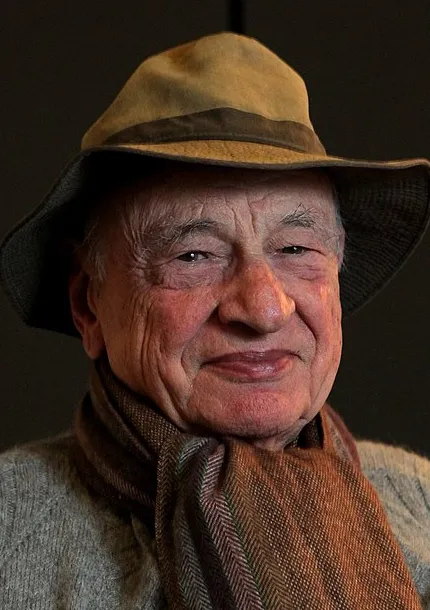
Edgar Morin was a French philosopher, sociologist and writer whose influential work developed a far-reaching account of complexity, knowledge and the human condition.
Across more than eight decades of thought and public engagement, he challenged the separation of disciplines and argued that reality must be understood through the relationships, contradictions and uncertainties that compose it.
UNESCO pays tribute to the legacy of Edgar Morin, 2026Complexity does not mean that reality is merely complicated. It means that phenomena are woven together through relationships, interactions, contradictions, feedback and consequences that cannot be understood in isolation.
Complex thought does not eliminate uncertainty. It teaches us to think and act responsibly within it.
In a work commissioned and published by UNESCO, Morin proposed seven complex lessons for education. The work is Morin's contribution, not a doctrine formally adopted by UNESCO.
Understand how every act of knowledge can be affected by perception, interpretation and deeply held assumptions.
Place information within its context and reconnect parts with the systems to which they belong.
Recognise the biological, psychological, social, cultural and planetary dimensions of human existence.
Understand humanity's diversity within a shared terrestrial community of destiny.
Learn to make responsible judgements without expecting complete prediction or control.
Cultivate empathy, self-examination and the capacity to encounter perspectives different from one's own.
Connect individual, society and species through responsibility, democracy and planetary citizenship.
In the Forum's contemporary application, different peoples and cultures preserve their histories and identities while remaining connected through ecological systems, technological networks, global risks and a common future.
Morin's idea of terrestrial identity does not erase difference. It asks humanity to recognise a community of destiny within which diversity and unity must be thought together.
Edgar Morin, Our Common Home, UNESCO Courier, 1995; republished 2019The World Humanism Forum draws inspiration from Morin while developing its own contemporary and intercultural trajectory.
Planetary Humanism is not presented as Morin's framework or as a closed doctrine. It is the Forum's horizon of inquiry and action, connecting complexity, dignity, plurality, interdependence and responsibility.
The relationship between Edgar Morin and Claudio Pedretti developed through dialogue around humanism, complexity and the responsibilities of our time.
Morin wrote the preface to Dear Edgar, and they co-authored a 2025 essay published by Project Syndicate. These exchanges form part of the intellectual journey that led to the World Humanism Forum.
Read the co-authored Project Syndicate essayMorin's legacy remains alive when it helps us interpret new realities, question fragmented approaches and create connections between knowledge and responsibility.
The Forum seeks to honour this legacy while opening its work to other intellectual, cultural and ethical traditions.
One Planet. Many Civilizations. One Shared Destiny.